1998 Overland Journal: Guatemala to Mexico on the Green Tortoise Bus
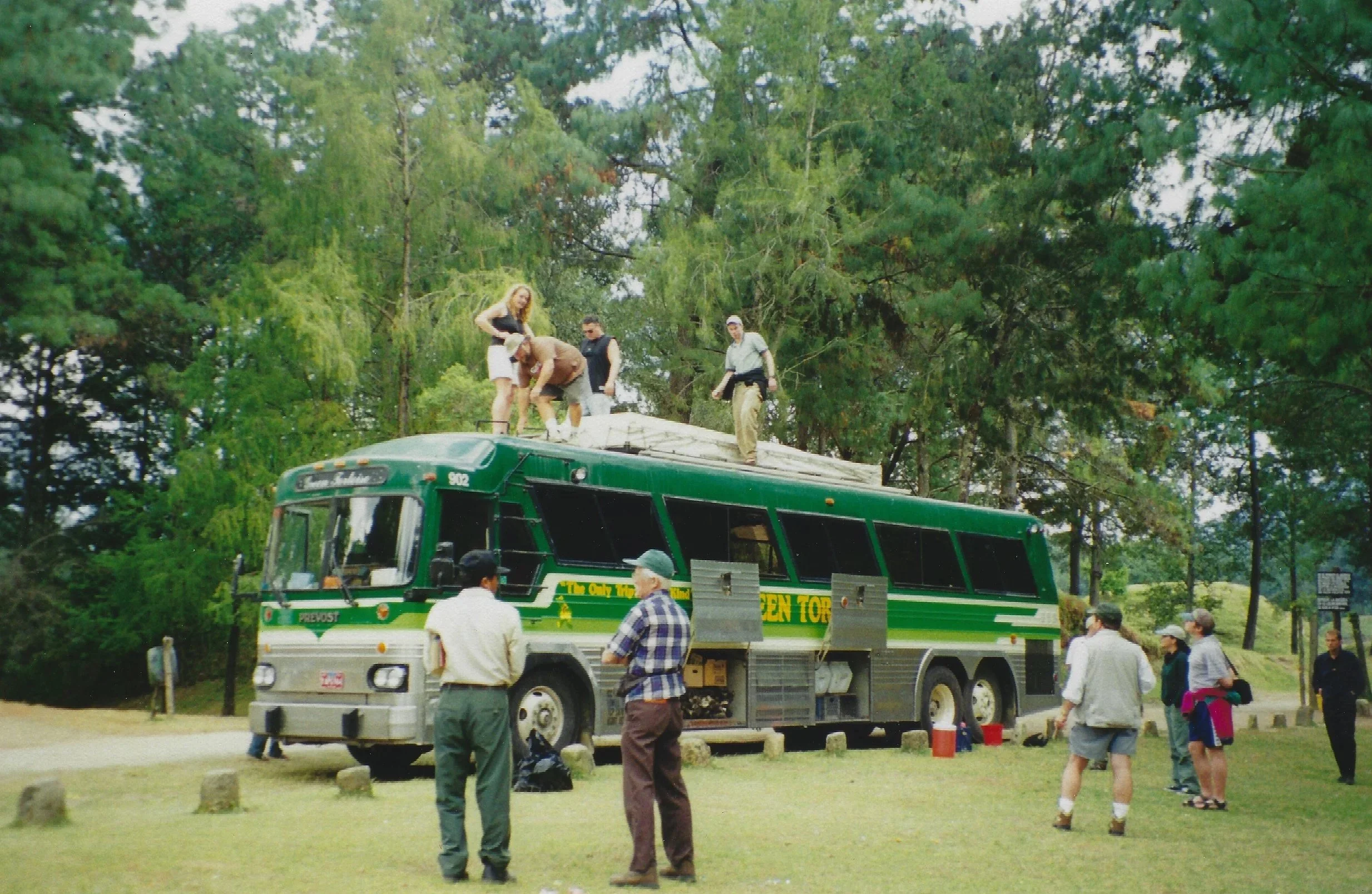
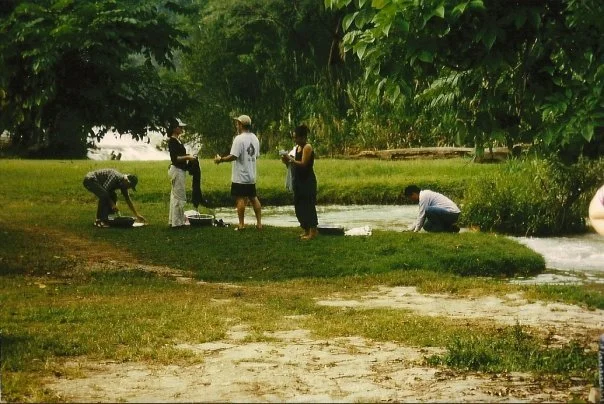
Unpacking the Green Tortoise at Our First Night's Camp
This is my journal from a January, 1998 overland trip from Guatemala through southern Mexico on a hippie bus with the legendary Green Tortoise. I was 22 years old and traveling solo for the first time in Central America.
The trip connected major Maya archaeological sites, colonial towns, and natural stops in a flexible, informal style. The itinerary often shifted due to weather, road conditions, and timing. We covered roughly 1,500 miles on rough roads, alternating between camping, night drives, and occasional hotels through Chiapas and the Yucatán Peninsula in Mexico, Guatemala (especially the Petén region around Tikal), and parts of Belize.
At the time, I did not fully understand the historical context. We were moving through Guatemala shortly after the Peace Accords and through Chiapas in the lingering shadow of the Zapatista uprising, before smartphones. I did not even know what email was then. Trips like this feel rare now, and I am grateful to have had that unstructured, unpolished experience.
Here are some excerpts from my journal.
Arrival in Guatemala
I arrived in Guatemala City around 10:45 p.m. with no local currency or quetzales. Everything was closed. I asked a guard with a semi-automatic weapon if he spoke English. He did not.
Luckily, another man who resembled a frog overheard me and decided to help. He said it was dangerous to be there alone at night. Frog man exchanged $25 for me and spoke with a cab driver. He told the driver to make sure I got to Villa San Francisco in Antigua and wrote down the cab’s number.
Antigua was up in the mountains and noticeably cooler. The driver took the mountain turns fast until we reached the cobblestone streets. The walls of the city were high and the streets narrow.
We pulled up in front of Villa San Francisco, and the driver knocked on the tall wooden doors.
A British or Australian man answered, and the driver held out his hand, saying, “un tip.” I gave him two American dollars.
Inside, a young Latin man sat at the desk. He asked me to follow him to my room. It was the only one left, a suite.
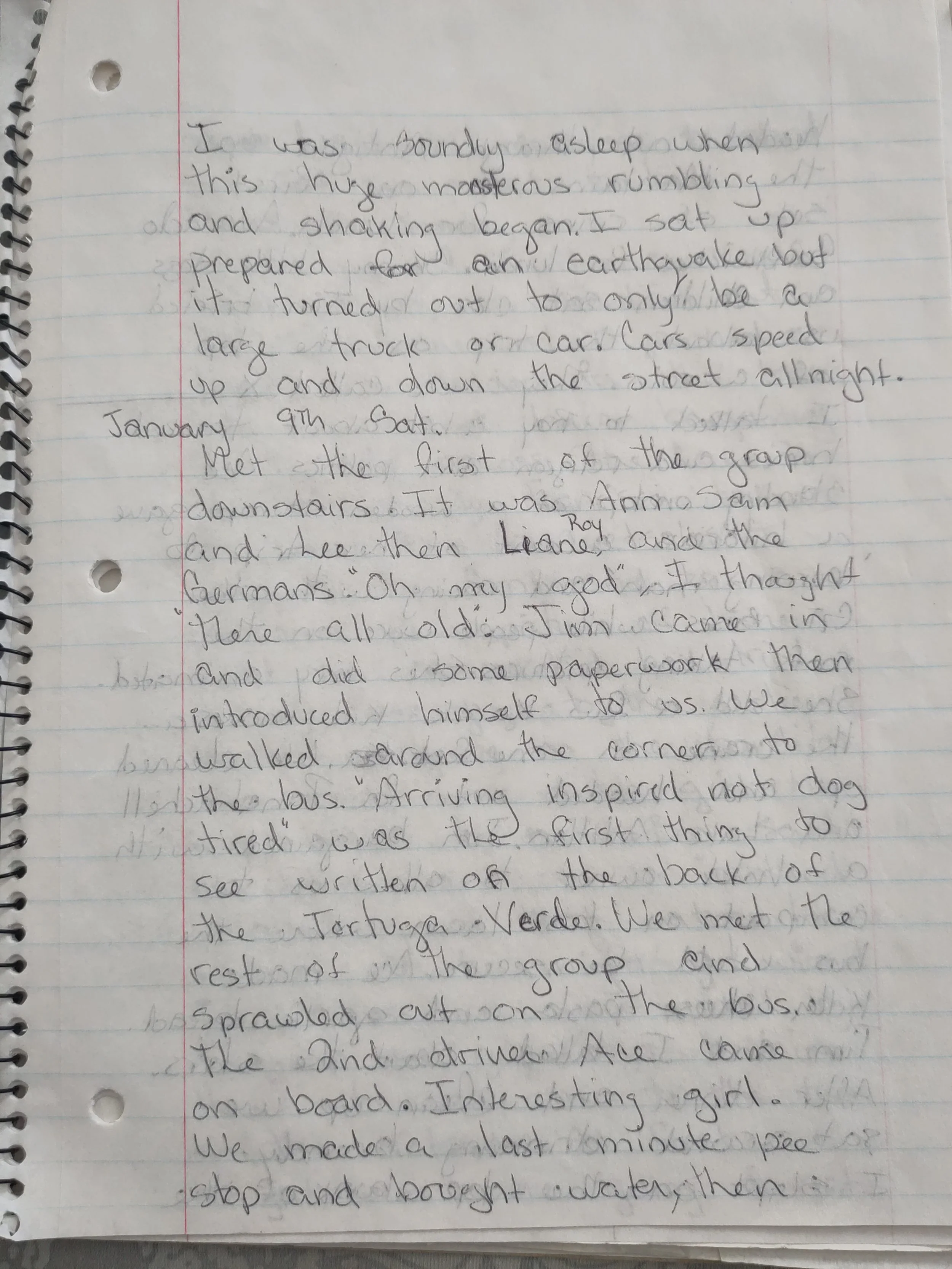
I was sound asleep when a huge, rumbling shake started. I sat up expecting an earthquake, but it turned out to be a truck or car passing close by. Cars sped up and down the narrow street all night.
Lake Atitlán
I met the first of the group downstairs. It was Ann, Sam, and Lee, then Liane, Roy, and the Germans. Oh my God, I thought, they’re all old.
Jim came in, did some paperwork, and introduced himself to us. We walked around the corner to the bus.
“Arriving inspired, not dog tired” was the first thing I saw written on the back of the Tortuga Verde.
We met the rest of the group and sprawled out on the busy bus. The second driver, Ace, came on board. Interesting girl. We made a last-minute stop for water and a bathroom break, then headed out through Antigua and into the mountains toward our first set of ruins for lunch. Avocado sandwiches for lunch. Skinny little dogs and children sat close by.
Jim briefed us about the trip on top of a ruin. They were called ______. I talked to Roy a bit about tracked homes, religion, and politics.
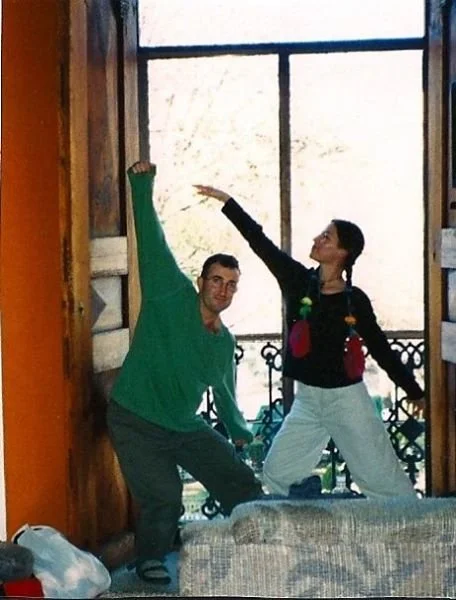
Ace, standing on top of a wooden stump, gave a hilarious account of her trip to Burning Man and racing Green Tortoise buses while people were on the roofs taking pictures. She was very animated. She even did a few Karate Kid moves, including the crane pose.
We cleaned up and headed out for Panajachel and Lake Atitlán. Jim bargained with a hotel owner to allow us to camp on his lawn, where the bus would be secure.
Ace made killer cheese pasta and garlic bread. Jim and I talked about the stars.
After dinner and cleanup, we sat around drinking brandy. I slept on the top bunk of the bus. Liane told everyone to shut up, and we went to bed.
Volcano hike
We woke up at 6:00 for cereal breakfast. It was beautiful out.
Kid, Sam, Liane, and I packed a lunch and headed for the lake. We spent an hour bargaining for a ride across to San Pedro. Finally, Francisco took us for about 60 to 80 quetzales.
I sat in the front and took a panoramic photo of Liane with her camera.
Kid had earlier tried to rally some guys together to seek vengeance on banditos who had robbed some Dutch girls. He talked to Ben about it, but Ben said he didn’t want to be involved. Liane warned me Kid might get weird.
Once across, we were mobbed by a group of boys offering to take us to the top of the volcano. At first we thought it was a scam. It turned out to be one of the best, most challenging hikes I have ever done.
Our guide’s name was Moses. He said it would cost 80 quetzales. He ran home to grab lunch and a pack, and then we headed out through town. On the way, he greeted a couple of kids. From what I could gather, he was their teacher.
Coffee trees and other agriculture covered the base of the volcano. We tried coffee beans off the trees.
Liane and Sam were in excellent shape. She was a triathlon competitor, and he was a backcountry ranger in the Cascade Mountains. I was pretty slow going. I had a respiratory infection and breathing was hard, but it felt good to take deep breaths.
Kid had a strange philosophy he picked up from a Moroccan tribe about sprinting up the mountain and then stopping. He fell far behind.
Moses was a great guide. He stopped often so I could catch up.
Once, we stopped and swung on vines hanging from the trees. Moses, Sam, and Liane got more air off the ground. I was too chicken.
Further along, Moses used his machete to make staffs for us to walk with. It helped a lot, especially on the way down, which was very steep.
At the top, we had an amazing view. We could see the whole lake, the towns of Santiago and San Pedro, and across to Panajachel. The clouds reminded Sam of the Cascades, resting between and on the crests of the surrounding mountains.
Lake Atitlán, we learned, is a caldera, and the surrounding mountains were once part of a volcano.
We ate cheese, sliced meat, an apple, and drank water. Moses had a tortilla and vegetable medley. Sam and Liane took photos.
As we packed up to leave, Kid caught up and stayed to eat his Ho-Ho’s as we headed down. This part was easier, and the staff helped me keep my balance. I took big leaps down the steep trail.
Liane and Kid brought up the rear.
We paid Moses more than we had agreed. He was worth it, a kind guide with incredible endurance and knowledge of the area.
San Pedro was pretty cool. We rested at a restaurant bar near the lake, tried to rehydrate, and couldn’t resist coffee. We also drank the ever-present Orange Crush.
There were several white counterculture people living there, mostly bikers and alternative travelers. We figured they were probably long-term expats or dropouts from the States. They sold jewelry and “space cakes,” marijuana, and some kind of granola. Kid bought one from the bikers across from us. I kept unintentionally making eye contact with one of them, and wondering if he was speaking a secret silent drug language with his eyes.
Our legs were so sore from the hike.
We caught a boat ride back to Panajachel. It was the ride of my life. Had I not needed to pee so badly, I would have enjoyed it more.
Two kids sat on the bow holding ropes as we bounced off wakes and small waves. We were flying, but each hard landing made it worse.
Sam told us about his work with the Coast Guard. The stories were unbelievable—rescues in serious storms, huge boats, helicopters. One story was about a rescue with a helicopter. I only heard bits and pieces over the noise of our own boat, but apparently a helicopter picked up a guy who was already dead, and was over Sam's boat. The copter created some serious waves and turbulance. The dead body ended up swinging around on a cable and smashing straight into the window exploding blood and body parts everwhere. Sam and a friend had just enough time to look at each other and duck.
Back in Panajachel at the campground, I ran to the bathroom.
I was excited this stop had laundry service. What a treat. I gave my clothes to two young women to be laundered by hand. They also had a dryer. My clothes were so crisp and clean. We ate, washed up, and went into the adobe-style sauna.
I slept in the bus again. The shorter German was in a bunk nearby.
Fuentes Georginas Hot Springs
We drove to the hot springs, Fuentes Georginas. We stopped at a small intersection that catered to bus traffic, with fruit stands and hot meals. We also saw the active volcano Fuego. On the bus I finished my novel Stepmom and read See It and Say It in Spanish, a small phrase book I had picked up at the airport in LA.
We arrived at a dirt turnoff at the base of a mountain. The road was narrow and winding. The bus brushed branches along the way. I sat on the cliff side and got nervous at times. The steep slopes were covered with carefully maintained fields, divided into small plots. Each crop had a slightly different shade, even within greens. It was impressive how much of it was done by hand.
We passed puzzled-looking people along the way. Jim had driven the bus up here the week before, so the locals were probably wondering why the same green bus was back again.
We had several hours to kill before dark. Jim parked the bus next to the hot springs. Most of the group stripped off and jumped in. I decided to wait until dark so I would not feel self-conscious.
Jim and Ace made a $10 bet about whether I would get in naked. Ace said yes, Jim said no. They also bet on Liane.
Jim teased me for about 20 minutes, saying I should just do it. I told him he just wanted to see me naked, which shut him up.
Yoriko made us a special dinner: vegetable tempura with rice and sake. By the time dinner was ready, everyone was hungry. We ate with our hands.
Jim was already drunk, and Ace was sick, so we were mostly on our own, with Lee as bartender. Jim was slurring his words and insisting we stir the rice “a zillion times,” even though he did not know which pot he meant.
After dinner we washed dishes and cleaned up. Candles and lanterns were brought down to the hot springs, and we all got in.
Jim lost the bet and took my suit off in the water. Liane kept hers on. We told dirty jokes late into the night.
I slept on the bus. It smelled strongly of sulfur from the hot springs. I was sore from the volcano hike and could not sleep through the snoring, but at least we had a working toilet. I became very easily pleased.
We ate breakfast and prepared to leave. I walked up the road to get a better view of the volcano, which had been hidden by clouds the next day. The bus picked me up and we headed down the mountain.
The bus stopped. Jim and Ace got out to assess the road ahead. The cliffside road was giving way, and a large boulder had fallen from a landslide on the other side.
Jim came back and said we needed a road crew. He pulled out shovels and sledgehammers. We piled rocks along the collapsing edge and chipped away at the boulder. The men did most of the backbreaking work while I watched and cheered them on.
We stood down the road from the bus. Jim kept the door open and said he would jump if the bus went over the edge. He gunned it and made it through. We cheered.
After that, whenever we saw road crews, we would say, “We could do that.”
Border crossing and Chiapas
We were in a hurry to reach the border before it closed at 5 p.m. Near the crossing, I saw an old man and a younger man walking with packs. The younger one reminded me of someone I knew, with the same hair and build. The older man had a long beard and a limp.
We filled out paperwork and waited for a while. Jim came back and said it might take longer than expected because the border hours had changed.
We walked across the street to a cantina. Lee bought beer for most of us. The Germans played cards. On my way out, I tapped Albert on the head and he looked up just as Stephan won the game. Oops.
Jim bribed a man and got us across. Mexico is great that way. The man he gave money to and who Ace made eyes at had helped him out before last year. He was now a friend of Jim’s.
Recently, one of the guards was dragged out of a building by an angry mob to be beaten to death. This happened right when Jim pulled his tour up to the border. He put his group on the second story of a building while he and the other guy climbed on their bellies into the office to get the necessary paperwork to cross the border. They did this while the riot was going on outside. He told us all this after we had already boarded the bus and were safely on our way, of course.
We stopped at a restaurant along the way for dinner. Jim paid because we had no money. Lots of tortillas and salsa!
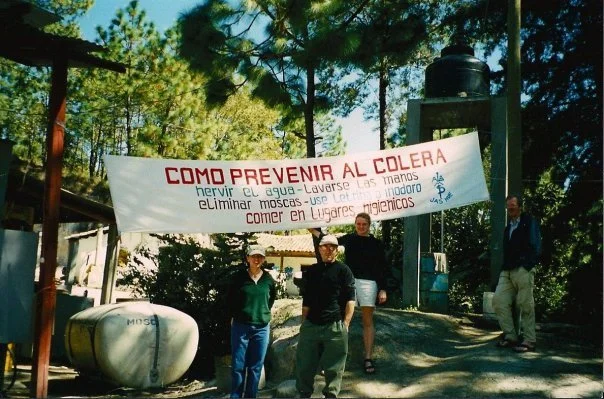
We were heading into San Cristóbal de las Casas late that evening. Jim warned us about political tension between the Zapatistas and Comandante Marcos. There had been a revolution there about ten years earlier.
Ann, Sam, Liane, and I decided earlier to share a hotel room. Sam and Liane had been teaching me about Hotmail and helping me get faster internet access.
We arrived in the center of town, the Zócalo. It was late, but I could tell I would like it. A charming place with beautiful architecture and shops.
The Germans came along and we found a hotel across from the Zócalo. I was quietly assigned to interpret room prices. It was difficult, but we checked the rooms and split the cost four ways. It was a great deal.
We took one room and the Germans took another. Liane and Ann went straight to bed. Sam, the Germans, and I went for a late-night walk.
We were turned away at our first choice of discotechs and continued around the block. I learned that Albert was 30 going on 31, and Stephan was 27. I was surprised and told them they looked much younger. They said it was the fresh mountain air in Germany.
Sam and I left them and I stopped at a small bar before heading to bed. Our room had thick wooden doors, white stucco walls, and a balcony overlooking the Zócalo.
The next morning we found a small café and had café con leche for breakfast.
Agua Azul, Misol-Ha, Palenque, Calakmul
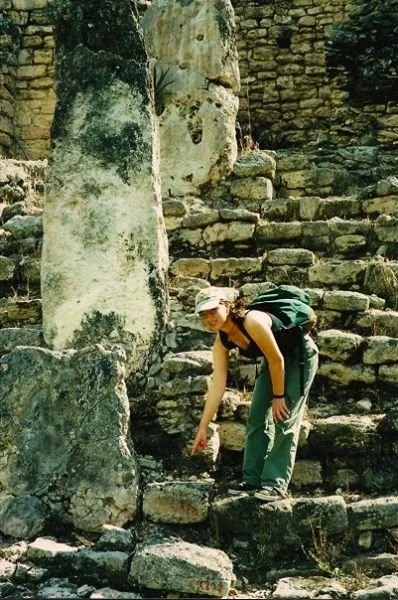
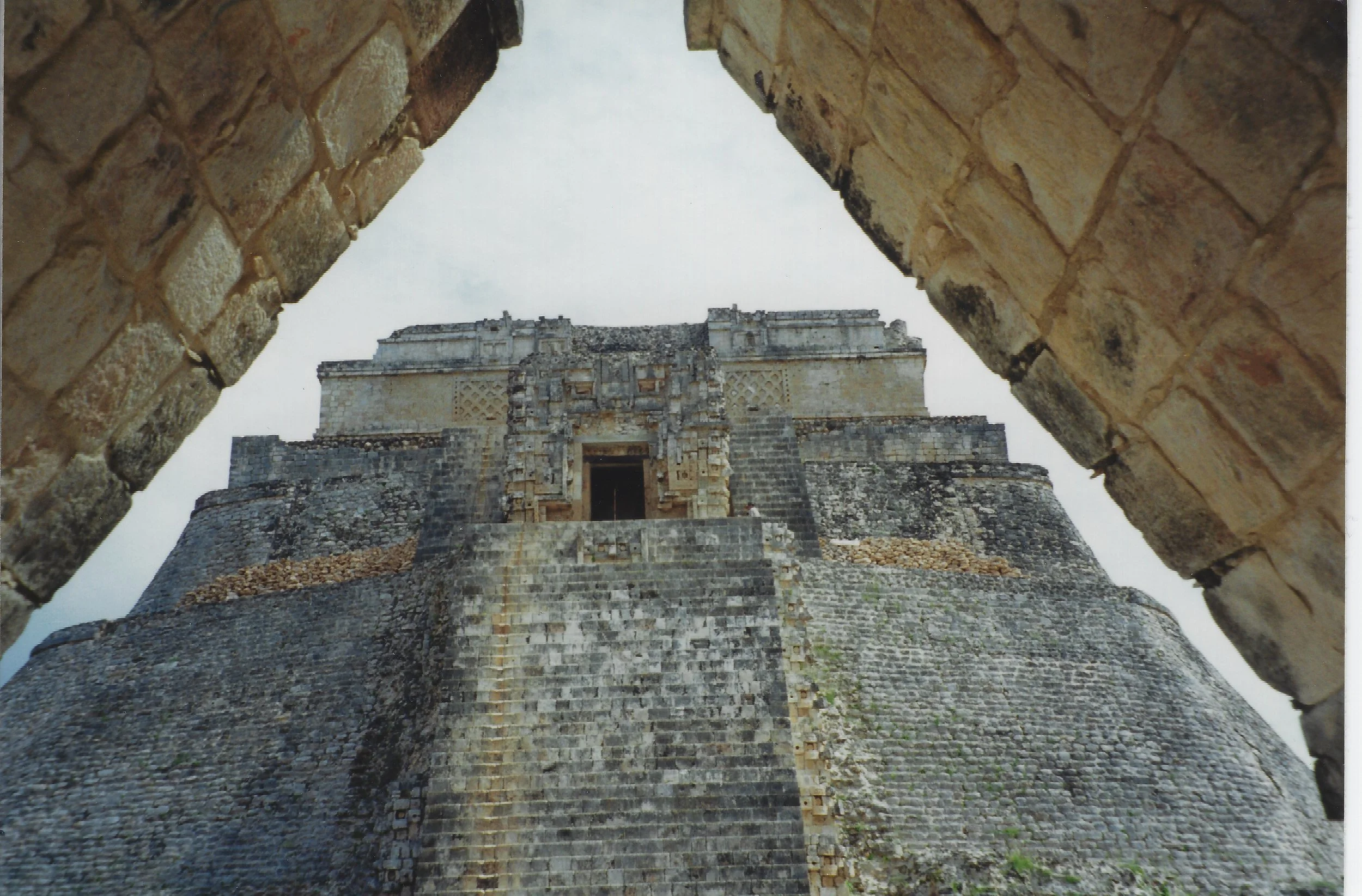
Second set of Maya ruins. We spent the day moving through another site, walking through stone structures and open jungle paths, then returned to the bus.
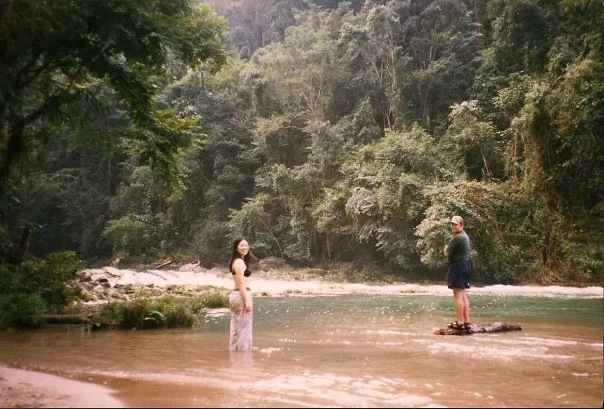
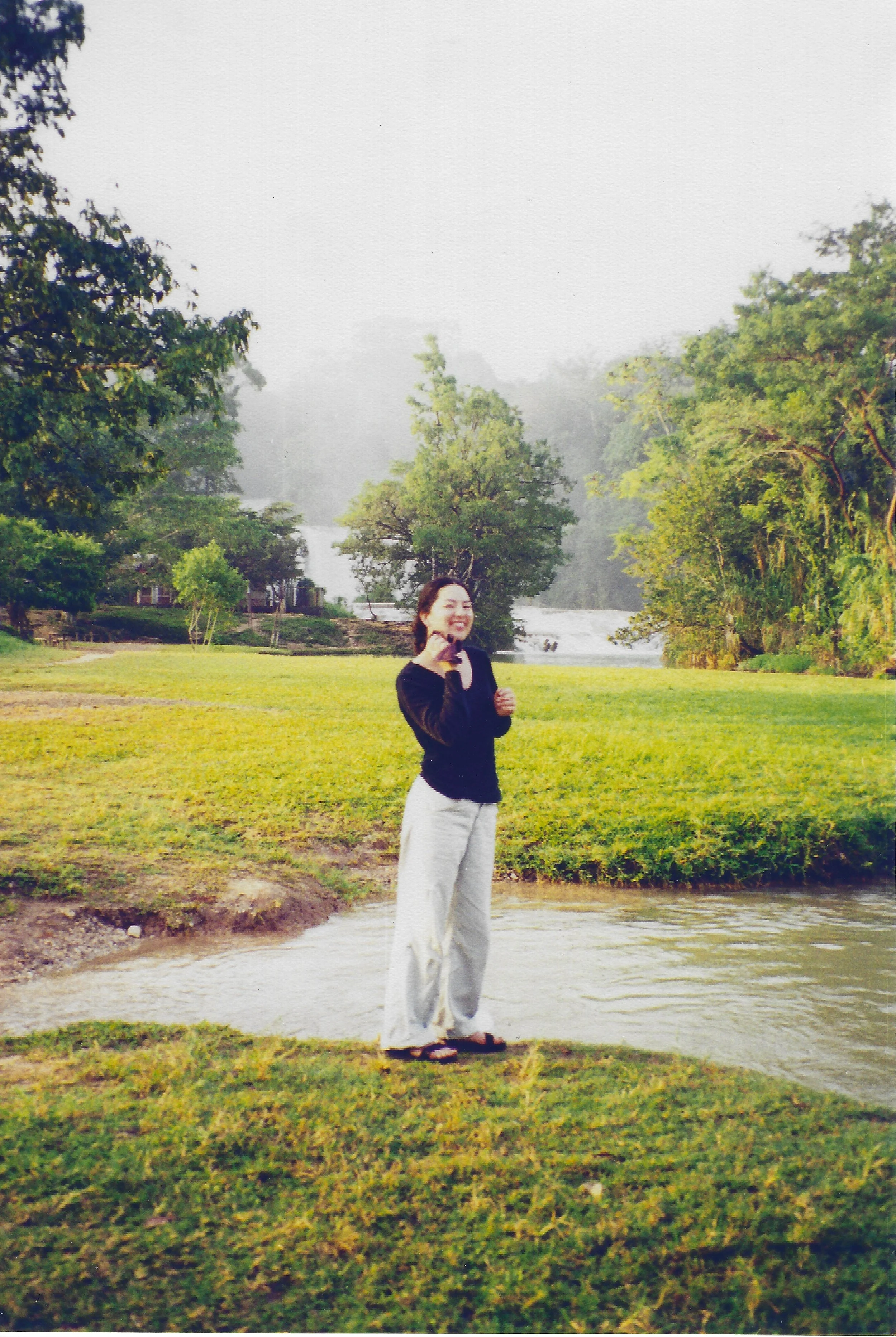
We left for Agua Azul the next day. The water was bright blue and fast-moving, cutting through the jungle. We ate and I went to bed early. In the afternoon I hiked along the river around 2 p.m., following the current through the trees, then returned to camp. That night I swam in the river with Albert. The water was cold and fast-moving in the dark.
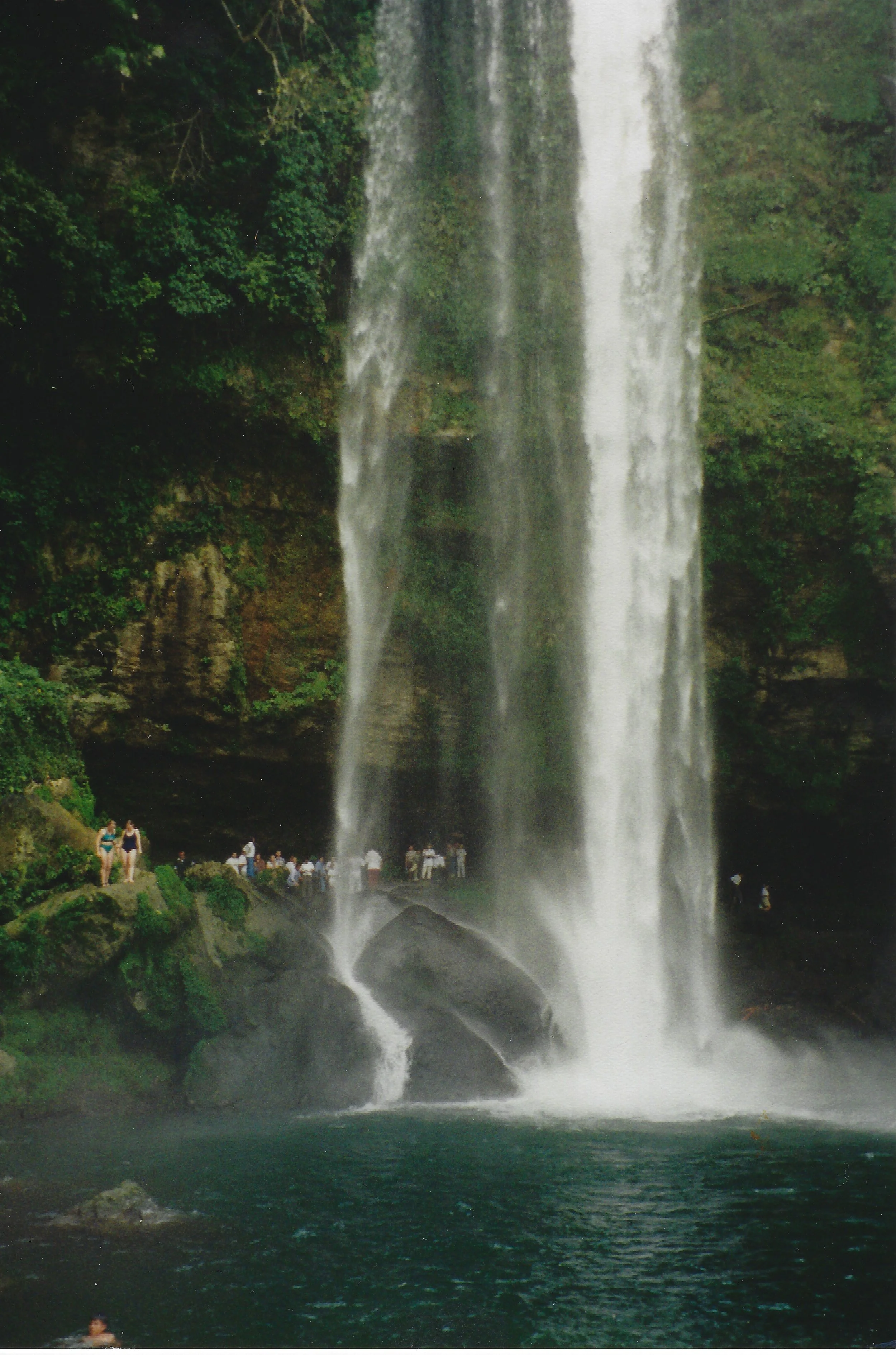
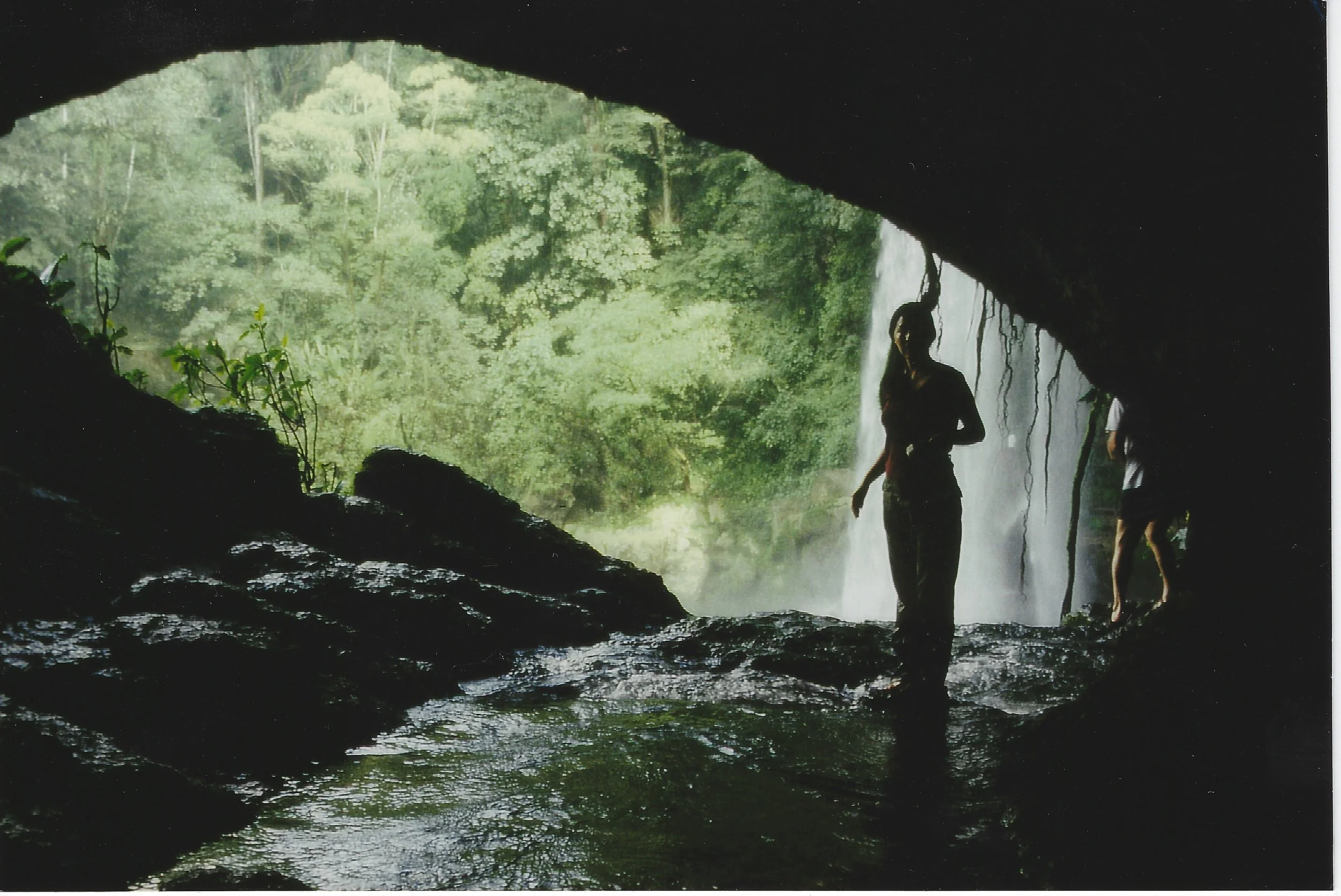
We drove to Misol-Ha, a waterfall featured in the movie Predator. It dropped into a wide pool and had a cave you could walk behind the curtain of water. The sound inside was overwhelming. From there we continued to Palenque for supplies and shopping, then camped outside town.
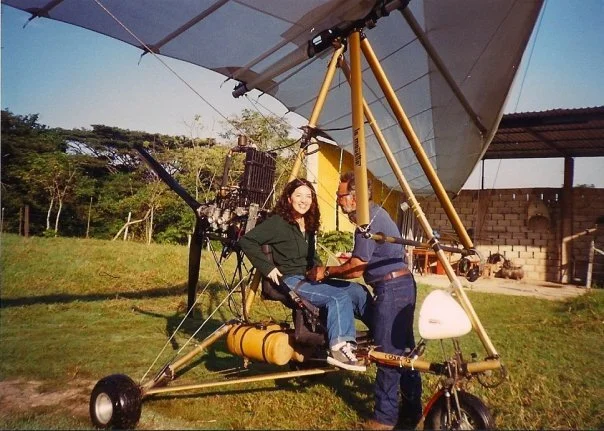
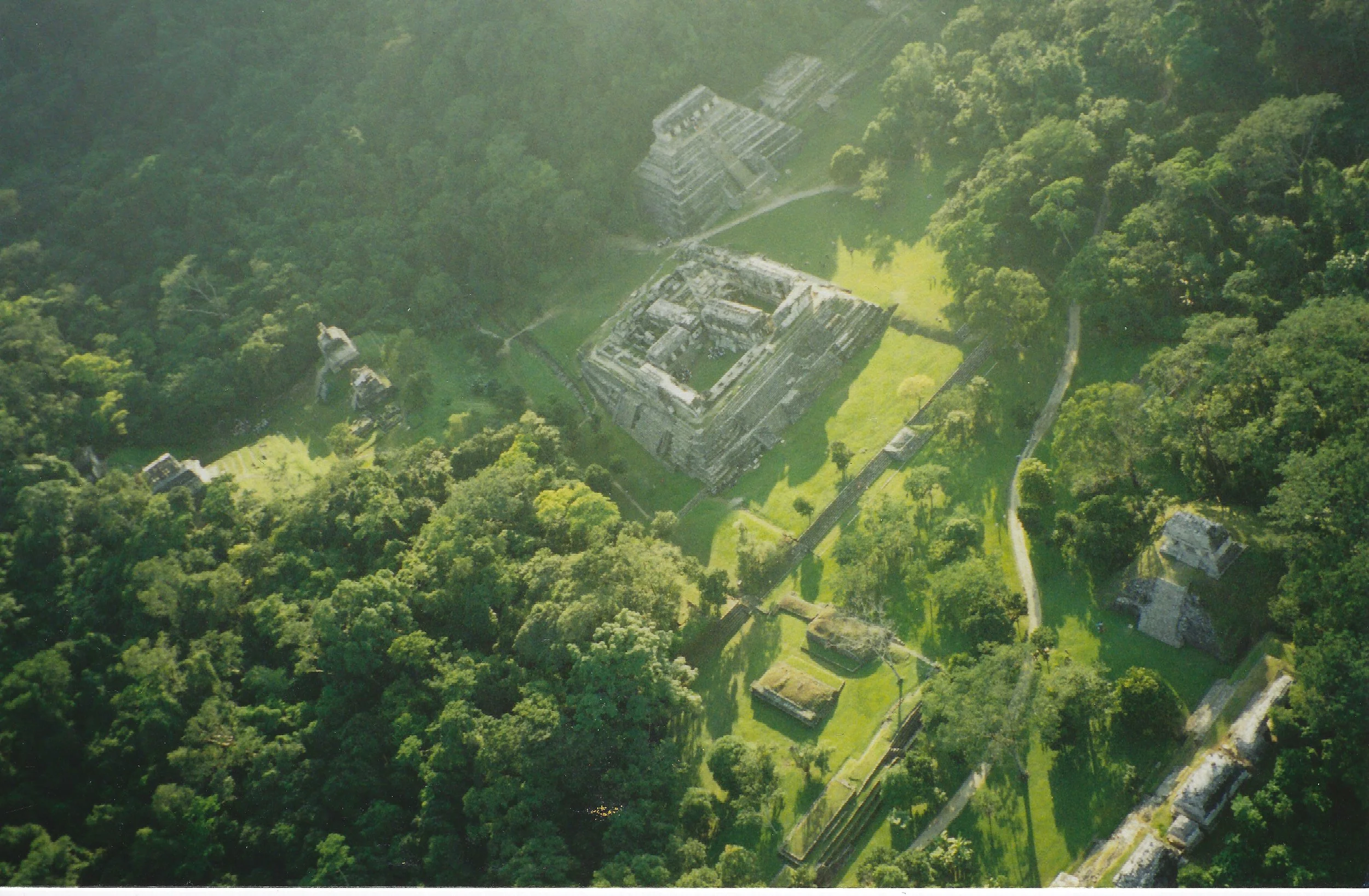
The next day I flew above the ruins on an ultralight, circling over jungle canopy and stone structures. It was amazing seeing the scale from above. After landing, we toured the ruins with a guide who explained the history and layout of the site. Later we left Palenque and drove through the night.
We arrived in Calakmul, remote and largely undeveloped ruins deep in the jungle. The site felt quiet and expansive, with very few people around. I think this was where I read about a female archaeologist I was impressed by, though I can’t remember her name now. We left around 3 p.m. and arrived in Becan later that day, where we slept in a parking lot.
Yucatán and Caribbean Coast: End of Trip
Chetumal. Ann, Jim, and I visited more ruins and hitchhiked back with a truck. On the return, we rode in the back of a dump truck. We also took a chicken bus, a camioneta, which blew a tire along the way. Eventually we arrived in Chetumal and met the rest of the group at a museum. Later we went to Bacalar Cenote Azul. We stayed at a campground with animals and swam in a calm, clear lake.
We left for Tulum the next day. We visited the ruins on the beach, set above the Caribbean Sea. The contrast of stone and water was striking. From there we continued to Playa del Carmen and then Xpu Ha, staying along the coast.
We took the ferry to Cozumel. It felt very touristy after the remote places we had been. We rented bikes and rode about 13 km to the ruins. Anne’s pedal broke along the way, and Sam traded bikes with her without hesitation. We never made it to the ruins and caught a ride back to town in the back of a truck.
We ate at an Italian restaurant and talked with Sam about opera. Then we took the ferry back to Playa del Carmen and caught a bus to Xpu Ha.
We spent a full day lounging with Albert, Stefan, and Ace. The pace slowed completely. Albert and I lay in the sand under a palm tree and went through our journals together.
I later accompanied Ann back to Playa del Carmen. She wanted to leave early. I got a hotel with Albert and relaxed in a hammock on the porch.
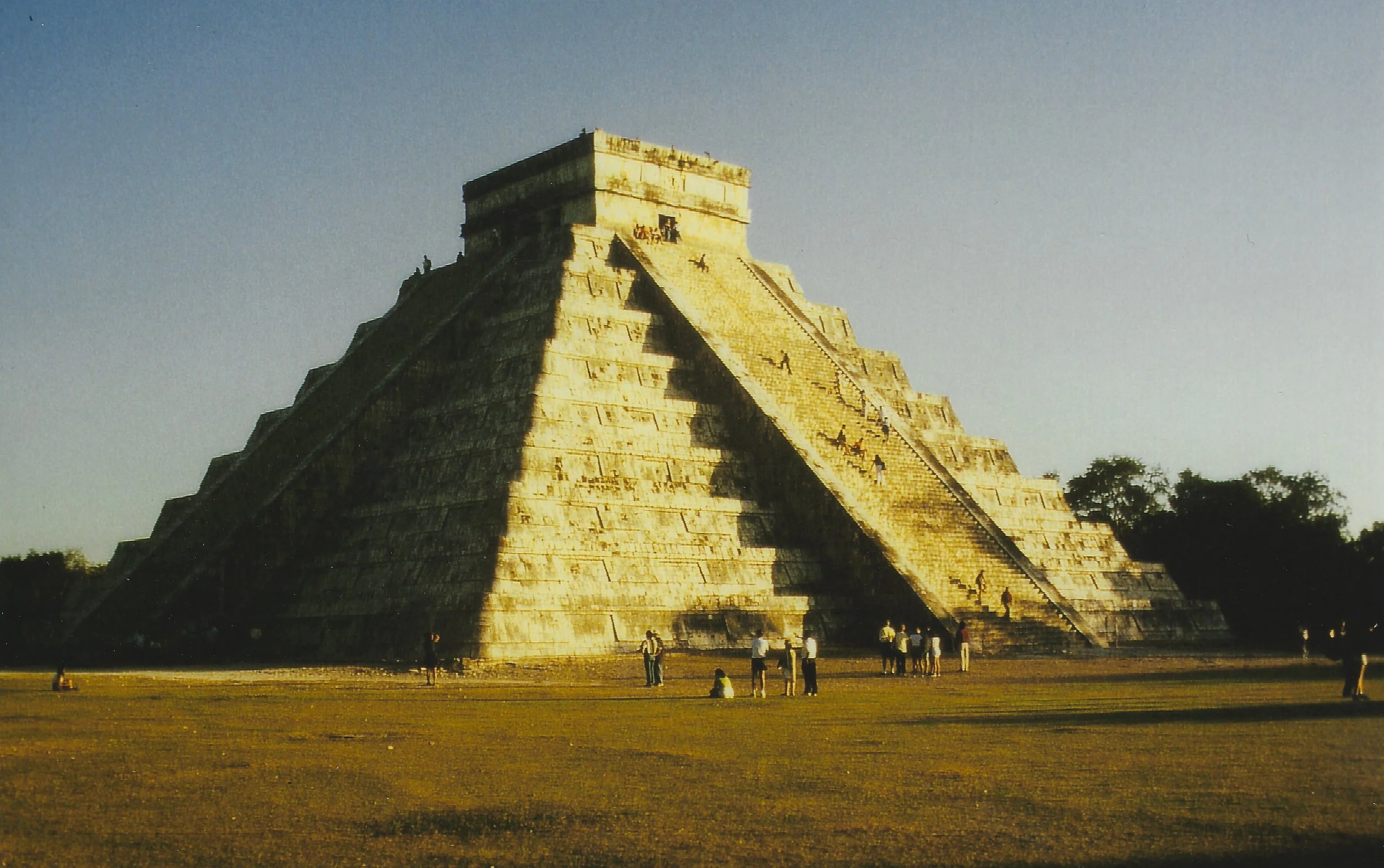
A day later I went to a cenote near Valladolid and then left the group at Chichen Itza, as they continued on to Mérida. I took a bus toward Cancún, which stopped in Mérida, where I saw the group one last time through the bus window as it pulled away.
I missed my flight and spent the night at the airport with a friendly security guard who wanted to practice his English. We talked for a while and passed the night there.
The next day I caught my flight home with a stop in Guadalajara.
Looking back at age 50
Looking at this journal now, I am so proud of 22-year-old Shawn and so glad I took that first international trip solo. I will never forget the jungles, rivers, and ancient ruins where we slept with no rules.
My handwriting was better then and slanted to the left. I also notice I was already good at hiking downhill, which is still true today.
We were all very nimble and flexible on this trip. I did not think much about logistics or safety, which is crazy! I’m especially grateful that man helped me out in Guatemala City when I landed at night with no local currency. That could have gone so badly.
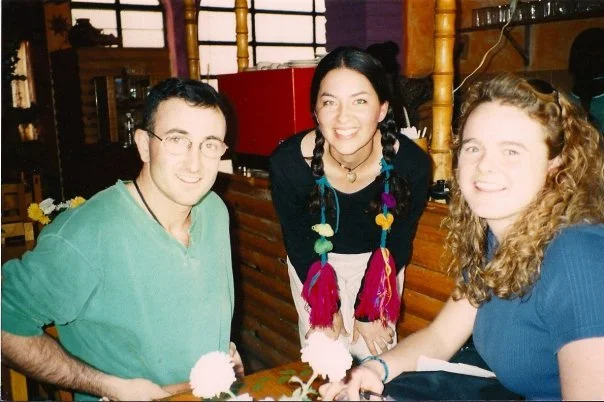
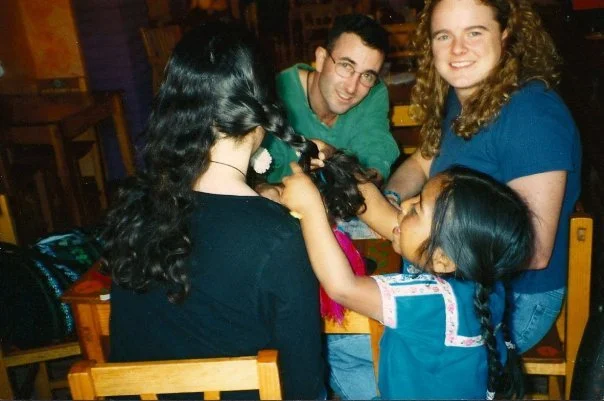
It was a different time. No phones, no maps in your pocket, no way to check anything in real time. I am glad I wrote it all down. I did not even bring a camera on this trip. These photos were all taken by fellow travelers who were kind enough to take them and share them with me.